Facebook
 X
X
 Pinterest
 Copy Link
There are a multitude of reasons why people don’t put their parents in a nursing home as soon as their care needs grow. They may want to help their parents maintain independence, for example, or protect them from potential elder abuse at certain facilities or want them to have greater interaction with their grandchildren. But cost is increasingly becoming a part of the equation — and the numbers explain why.
Nursing home care now averages roughly $10,000 a month nationally, according to the American Council on Aging, but that figure swings wildly by geography — from under $6,000 a month in lower-cost states like Texas to more than $32,000 a month in Alaska. Add in the fact that Medicare’s coverage for long-term care is limited, and many families end up paying out of pocket sooner, and for longer, than they ever budgeted for.
According to AAA, older adults overwhelmingly want to stay in their homes (75 percent) and communities (73 percent), but many (44 percent) feel a move is inevitable, according to AARP’s “Home and Community Preferences Survey.”
Why? Housing costs and communities that aren’t set up for aging adults, says Rodney Harrell, PhD, AARP vice president of family, home, and community. And that’s a concern, he adds, as the U.S. will soon have more people over the age of 65 than under 18. While the majority of elderly Americans want to live out their golden years from the comfort of their own home, aging at home safely often requires more caregiving support than families can provide alone, and professional in-home care can be costly.
There are a variety of housing opportunities, ranging from ADUs (Accessory Dwelling Units); 55+ Communities; Co-housing; CCRCs (Continuing Care Retirement Communities); and multigenerational living. As for those who don’t want to compromise, other solutions have also emerged, like homesharing platforms that match seniors with roommates to make aging in place more affordable and less lonely.
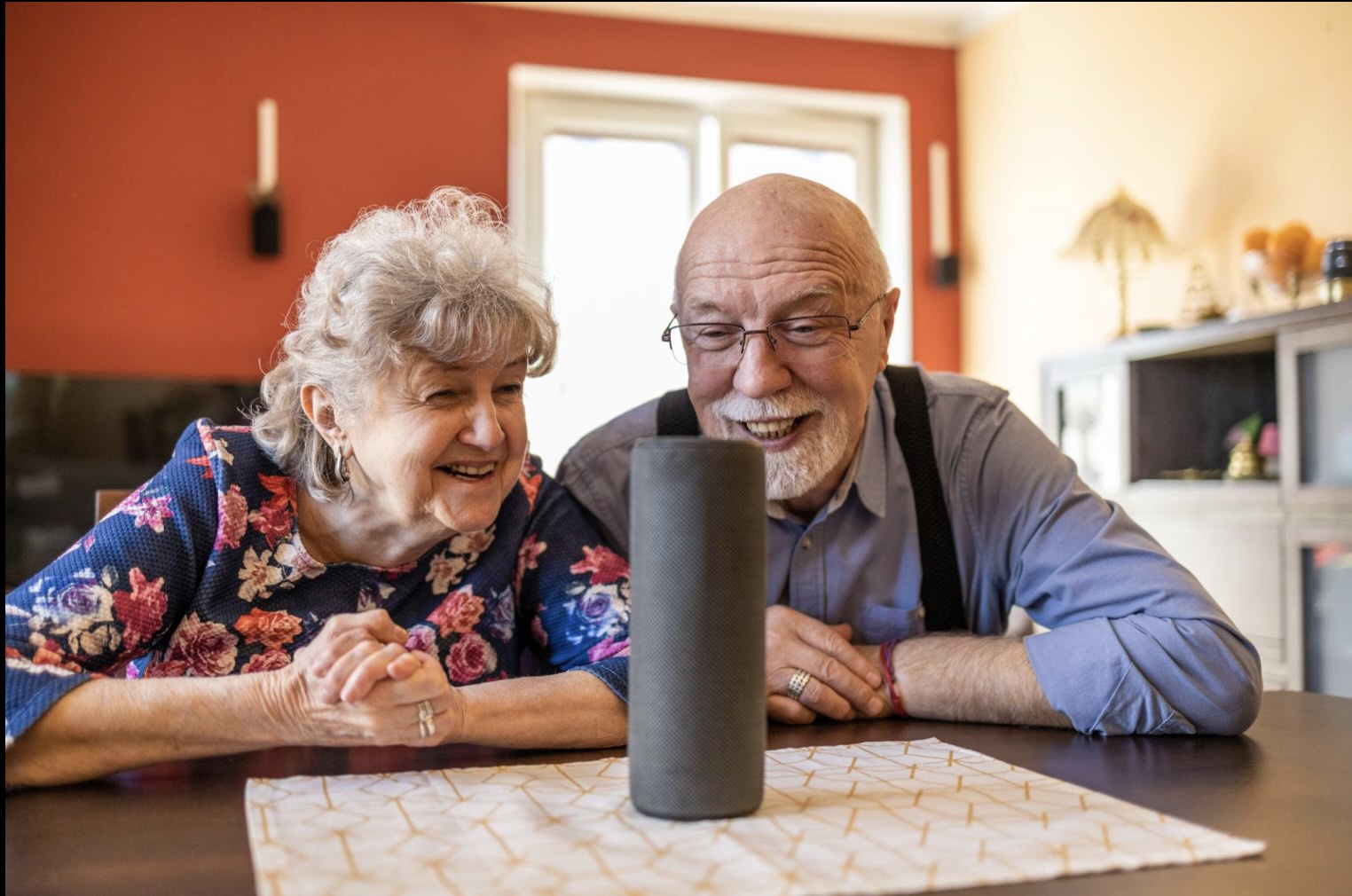
But consider an entire new generation of “age tech” that’s taking center stage. The devices, many outfitted with AI, help monitor and support health and safety, aiding older adults’ independence and giving loved ones greater peace of mind — often at a fraction of what a facility stay would cost.
Caregiving Gets an Update
One example is Sensi AI, a little white box that constantly listens for signs of danger. It monitors movement, speech patterns, and deviations in a person’s regular routine (e.g., a new cough or too much time spent in a bathroom). Caregivers can request transcripts and receive automatic alerts when the AI hears trigger words like “fall” or “help.”
There’s also JubileeTV, a smart TV with a built-in camera that can be controlled remotely, and AI companions like ElliQ, which can help with everything from medication reminders and managing appointments to solving crossword puzzles.
They’re not necessarily inexpensive (JubileeTV costs about $800), but when nursing home care can run $10,000 a month or more, even the priciest age tech starts to look like a rounding error by comparison.
The Biggest Trade-off
… is privacy. But for many seniors, the ability to remain independent and comfortable at home seems to outweigh the concerns. Wired writer Steven Blum, who installed Sensi’s device for his 86-year-old father, said the older Blum, who insisted on staying put in his home, found it “pretty weird” but “worth it.”
Consider all of this, and then there are other circumstances that come into play: amid a serious shortage of caregivers, the rising cost of assisted living, and a system where Medicare simply won’t foot most of the bill, the adoption of age tech might just be necessary, if not inevitable — already, 25% of caregivers are using apps, video platforms, wearables, and other systems to monitor loved ones, per AARP.
Sources: American Council on Aging (2026 nursing home cost data); AARP “Home and Community Preferences Survey”; Wired.